
Common Knee Injuries in Sports and the Role of Knee Braces in Treatment and Recovery
The human knee is a marvel of biological engineering—a complex hinge joint designed for powerful movements, stability, and shock absorption. However, its intricate structure, comprising bones, ligaments, tendons, and cartilage, also makes it highly vulnerable, especially in the dynamic and often high-impact world of sports. Athletes across all disciplines—from basketball players executing explosive jumps to runners enduring repetitive stress—frequently push their knees to the limit, sometimes resulting in debilitating injuries.
Understanding these common knee injuries and how they can be managed, including the important role of knee braces chosen with your clinician, helps with both prevention-minded training and safer, effective recovery—and a confident return when you are cleared to play.
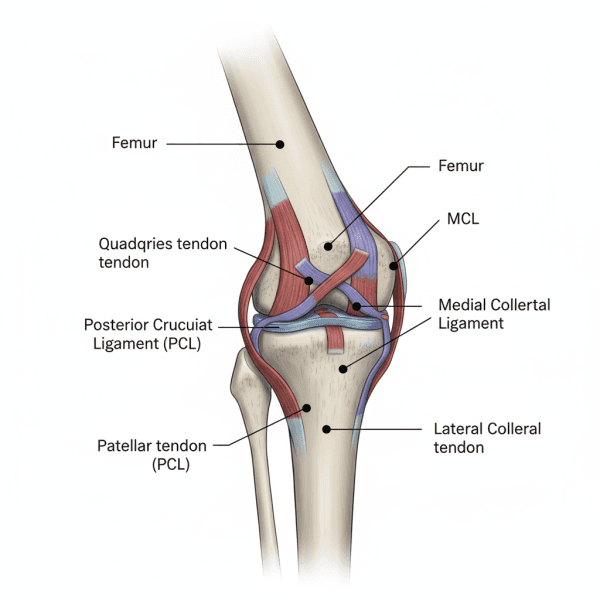
1. Anterior cruciate ligament (ACL) tear
The anterior cruciate ligament (ACL) is one of four major ligaments that stabilize the knee joint, connecting the thigh bone (femur) to the shin bone (tibia). It is crucial for limiting how far forward the tibia shifts under the femur and for rotational stability. ACL tears are among the most serious knee injuries in sport—especially in activities involving sudden stops, changes in direction, jumping, and landing, such as soccer, basketball, American football, and skiing.
Most ACL injuries are non-contact—think of pivoting sharply or landing with the knee collapsing inward. The moment of injury often comes with an audible or felt pop, followed by swelling, instability, pain, and difficulty bearing weight in the acute phase.
A complete tear frequently leads to ACL reconstruction surgery, commonly using graft tissue from your own patellar or hamstring tendons—or from donor tissue—with months of supervised rehabilitation afterward to rebuild strength, range of motion, and confidence in planting and pivoting mechanics.
Where knee bracing fits
Across recovery phases, clinicians may prescribe or recommend different brace archetypes—from controlled post-operative immobilization or limited range-of-motion (ROM) hinge settings to lighter stabilizers once you return to drills or competition. Goals include protecting healing tissue, resisting unwanted tibial translation or rotation cues, or simply adding confidence—not replacing strength work or agility retraining prescribed by physiotherapy.
Devices should always be selected, adjusted, and progressions approved by your surgical team or sports-medicine professional; self-diagnosis and DIY bracing timelines can delay proper healing or conceal instability that still needs definitive care.
Work with your care team
Ligament pathology, cartilage issues, fracture patterns, and pre-existing alignment all change what is safe and useful. Pair your brace plan from Orthoneva—or any manufacturer—with regular follow-up exams, return-to-play testing, and load management tailored to your sport.